
Table of Contents
Kurti Guide 2026: A kurti is a tunic style top for women that falls anywhere between the hip and the ankle, worn on its own or paired with leggings, palazzos, or jeans. The main styles are long kurti and short kurti, and the right one depends on your height, the occasion, and how you want to pair it. This guide covers both, along with fit, fabric, and styling.
I’m one of the founders here, and I still remember the first time we sat down to decide what kurtis to stock. We had strong opinions about fit and fabric, and weaker opinions about what customers actually search for before they buy. Three years and a lot of return requests later, this guide is everything we wish someone had told us on day one, minus the guesswork.
Long Kurti or Short Kurti: How to Decide
Long kurtis fall below the knee, sometimes to the ankle, and work best for office wear, festive occasions, and anyone who prefers more coverage. Short kurtis end at the hip or mid-thigh and suit casual outings, college wear, and warmer months when you want something lighter.
If you’re petite, a short kurti or a long kurti with a straight cut tends to elongate the frame better than a flared one. If you’re taller, both work, though a long kurti with a high slit gives you more room to experiment with pairing.
Neither is objectively better. It’s really a question of where you’re wearing it and how much fabric you want moving with you through the day. We go deeper into this comparison, height by height and occasion by occasion, in our dedicated guide on long kurti vs short kurti.
Kurti Guide: Types of Kurti Worth Knowing
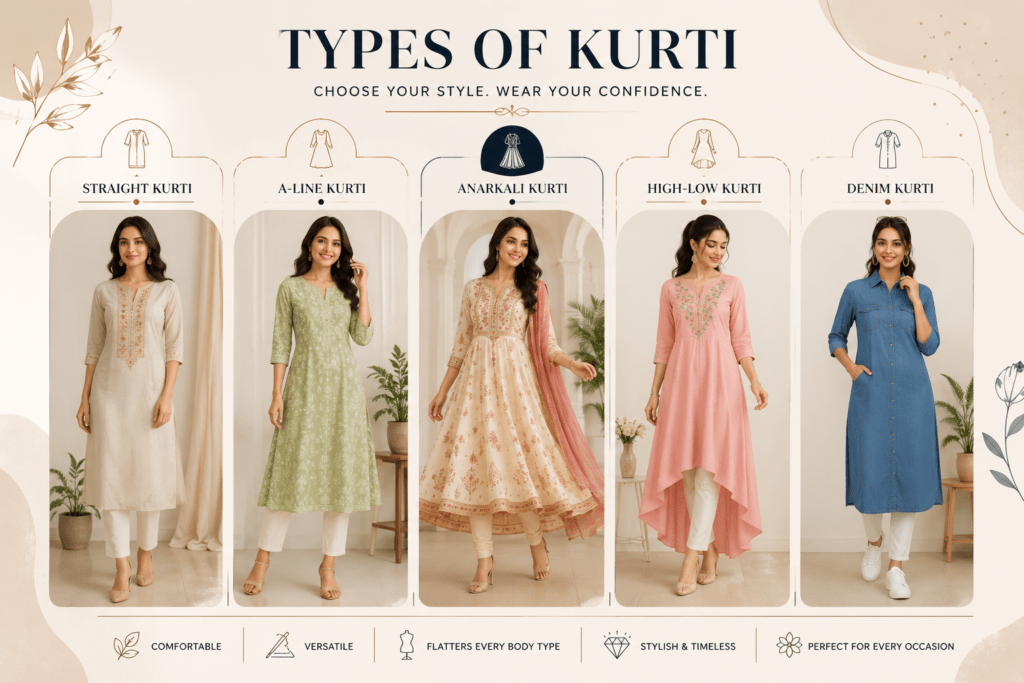
There are more types of kurti than most first time buyers expect, and knowing the names helps when you’re searching or filtering online.
Straight kurti. A simple, fitted silhouette that falls straight from the shoulder. Reliable for office wear and everyday use.
A-line kurti. Flares gently from the waist down. Flattering on most body types, which is why it’s one of our steadiest sellers.
Anarkali kurti. Fitted through the bodice, then flows out into a full skirt below. Built for festive occasions and weddings, not daily wear.
High-low kurti. Shorter at the front, longer at the back. A newer, more youthful cut that pairs well with slim pants.
Kaftan kurti. Loose and relaxed, closer to a robe than a fitted top. Comfortable for travel or a lazy Sunday.
Denim kurti. A newer entrant that blends ethnic silhouettes with denim fabric. Works well with leggings for a casual, slightly western look.
Each of these has its own styling logic, and we’ve written separate guides on the ones that generate the most questions, including high low kurti styling and denim kurti pairing.
Kurti Neck Designs
The neckline changes the entire feel of a kurti more than people expect. A V-neck elongates the upper body. A boat neck suits broader shoulders. An Angrakha neck, with its wrap-over front, tends to flatter fuller figures. Cutwork and asymmetric necks lean more festive than everyday.
If you’re unsure which neckline suits you, our full breakdown on kurti neck design walks through this by face shape and body type, not just by what’s trending.
Fabric: What Actually Matters
Cotton kurtis breathe well and suit daily wear, especially through Indian summers. Rayon drapes softly and holds colour well, which is why we use it for a lot of our printed designs. Georgette has a lighter, flowier fall and works best for festive or evening pieces, though it needs a lining underneath for most cuts.
If you’re buying kurtis regularly, this is worth knowing before checkout, not after the first wash. We’ve laid out the full comparison, including care instructions, in our kurti fabric guide, along with a shorter piece specifically on kurti fabric care if you already own a few and want them to last. You can read that after going through this kurti guide.
Getting the Fit Right When You Can’t Try It On
We’re an online only store, so we hear this concern a lot, and it’s a fair one. That’s why we thought of creating this Kurti guide. A kurti that photographs beautifully can still fit wrong if you guess your size.
The fix is simple. Measure your bust, waist, and hip against a soft measuring tape, then compare those numbers to the size chart on the product page rather than your usual clothing size, since fit varies by cut and brand. We’ve put together a complete kurti size guide that walks through exactly how to take these measurements at home in under five minutes.
Kurti Guide: Styling a Kurti Beyond the Basics
A kurti is rarely the whole outfit. What you pair it with does most of the work.
With jeans, a short or straight kurti gives you an easy, everyday look that still feels put together. We cover specific pairings, including which cuts work best with which jeans styles, in our guide on kurti with jeans.
For office wear, a straight or A-line long kurti in cotton or a light rayon, worn with minimal jewellery, reads as professional without trying too hard.
For festive occasions like Diwali, Eid, or Navratri, this is where Anarkali and heavier embroidered kurtis earn their place. We update our festive kurti guide every season, since what feels current shifts year to year.
Buying Kurtis Online: What to Check Before You Order
Since you can’t touch the fabric before buying, a few things are worth checking on any product page: the fabric name, the size chart, the return window, and actual customer photos if the site has them. Product photos alone rarely tell you how a kurti will fall on a real body.
This applies whether you’re shopping with us or comparing across a few best kurti brands online. We’d rather you buy the right kurti from wherever fits you than the wrong one from us.
What’s Trending in Kurti Designs for 2026
A few things are showing up again and again this year. Softer, more muted colours like sage green and dusty rose are replacing brighter tones. Sleeves have become more of a design feature, with bishop and bell sleeves showing up even on otherwise simple kurtis. This kurti guide emphasises that embroidery has gotten lighter too, with subtle thread-work replacing heavier, all over patterns from a couple of years ago.
If you want the full rundown, Duova Studio track kurti designs 2026 in more detail, updated through the year as new patterns pick up.
Frequently Asked Questions
What is the difference between a kurti and a kurta?
A kurti is generally shorter, more fitted, and designed for women, while a kurta is longer, looser, and traditionally worn by men, though the terms are sometimes used loosely for women’s wear too.
Can a kurti be worn with jeans?
Yes. Short and straight cut kurtis pair well with jeans for a casual, everyday look. Flared or Anarkali styles are better suited to leggings or palazzos instead.
How do I choose the right kurti size when buying online?
Measure your bust, waist, and hip with a soft tape, then match those numbers to the specific size chart on the product page rather than relying on your regular clothing size, since fit varies between brands and cuts.
What fabric is best for everyday kurtis?
Cotton and rayon are the most practical choices for daily wear. Cotton breathes well in warm weather, while rayon drapes softly and holds print colour well over repeated washes.
If you’ve read this far, you probably know more about kurtis than most people shopping for one right now. That’s really the point of this guide. Explore the styles above, and if something’s still unclear, our team is a message away.