
I have ruined more than one good kurti simply because I did not know how to care for its fabric properly. A kurti I loved either shrank, lost its colour, or had its embroidery come apart after just a few washes, and most of the time it came down to using the wrong washing method. Proper kurti fabric care matters because it protects the colour, keeps the fabric soft, preserves the shape, and stops embroidery or prints from wearing out too quickly.
Every fabric needs slightly different care. What works well for a cotton kurti can actually damage a silk one, and what is safe for denim is not safe for chiffon. In this guide, I am going to walk you through complete kurti fabric care, exactly how to wash, dry, iron, and store the most common kurti fabrics, so your kurtis stay looking new for much longer. If you have not read it yet, I would recommend starting with my Kurti Guide 2026 for a broader introduction before diving into care routines here.
Table of Contents
Why Proper Kurti Fabric Care Matters
I did not think much about kurti fabric care until I noticed how differently two kurtis aged depending on how I washed them. Here is what proper care actually protects.
- Preventing shrinkage: Washing at the wrong temperature is one of the most common reasons kurtis shrink or lose their fit.
- Maintaining colour: The right washing method keeps colours from fading or bleeding onto other clothes.
- Preserving embroidery: Delicate embroidery and cutwork can fray or come loose without gentle handling.
- Extending fabric life: Fabrics that are cared for properly simply last longer, wash after wash.
- Saving money by reducing replacements: Taking care of what you already own means you do not have to keep replacing kurtis that wear out too soon.
- Keeping kurtis looking new: Good kurti fabric care habits keep the drape, texture, and finish of a kurti looking fresh for years, not just a few months.
Once I started following fabric-specific care routines, I noticed a real difference in how long my kurtis lasted. Let me walk you through how to identify your fabric before you even start washing.
Know Your Kurti Fabric Before Washing
Before I wash any kurti, I check the fabric first, since care needs vary quite a bit from one fabric to another.
- Cotton: Sturdy and easy to wash, but can shrink in hot water.
- Rayon: Softer and more delicate than cotton, prone to losing shape if handled roughly.
- Linen: Breathable but wrinkles easily and needs gentle handling to avoid fibre damage.
- Silk: Delicate and needs the gentlest care of all, ideally hand washed or dry cleaned.
- Georgette: Lightweight and sheer, so it needs a soft wash cycle or hand wash.
- Chiffon: Extremely delicate, prone to snagging, and best hand washed.
- Velvet: Should never be wrung or scrubbed, since it can crush the pile permanently.
- Denim: Durable and low maintenance, but should be washed inside out to protect colour.
If you want a deeper look at how each of these fabrics feels, drapes, and performs, I have covered all of that in detail in my Kurti Fabric Guide (2026): 15 Popular Fabrics & How to Choose the Right One.
How to Wash Different Kurti Fabrics
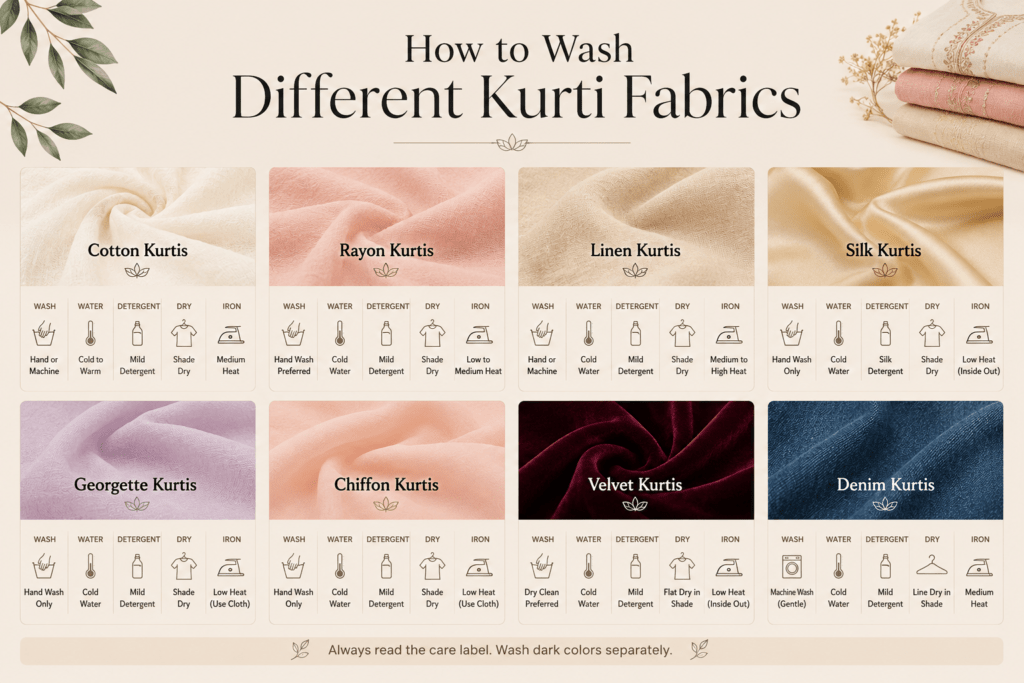
Here is a fabric by fabric breakdown of how I wash each type of kurti, covering hand wash versus machine wash, water temperature, detergent, drying method, and ironing advice.
Cotton Kurtis
- Hand wash or machine wash: Machine wash is fine, ideally on a gentle cycle.
- Water temperature: Cold to lukewarm water to prevent shrinkage.
- Detergent: A mild detergent works well for regular cotton kurtis.
- Drying method: Air dry in shade rather than direct sunlight to prevent colour fading.
- Ironing advice: Iron on medium to high heat while the fabric is still slightly damp for the best results.
Rayon Kurtis
- Hand wash or machine wash: Hand wash is safer, though a gentle machine cycle can work in a mesh bag.
- Water temperature: Cold water only.
- Detergent: Mild liquid detergent, avoiding harsh powders.
- Drying method: Lay flat to dry rather than hanging, since rayon can stretch out of shape.
- Ironing advice: Iron on a low setting, ideally with a cloth placed between the iron and fabric.
Linen Kurtis
- Hand wash or machine wash: Both work, but gentle machine cycles are fine for sturdier linen.
- Water temperature: Cold to lukewarm water.
- Detergent: A mild detergent without bleach.
- Drying method: Air dry in shade, reshaping the kurti while damp to maintain its form.
- Ironing advice: Iron on medium to high heat while damp, since linen wrinkles easily once fully dry.
Silk Kurtis
- Hand wash or machine wash: Hand wash only, or dry clean for more delicate pieces.
- Water temperature: Cold water.
- Detergent: A gentle, silk-safe detergent.
- Drying method: Dry away from direct sunlight, ideally flat on a towel.
- Ironing advice: Iron on a low setting, always on the reverse side of the fabric.
Georgette Kurtis
- Hand wash or machine wash: Hand wash is best to protect the delicate weave.
- Water temperature: Cold water.
- Detergent: A mild liquid detergent.
- Drying method: Air dry in shade, laid flat if possible to avoid stretching.
- Ironing advice: Iron on a low setting, since georgette can scorch easily under high heat.
Chiffon Kurtis
- Hand wash or machine wash: Hand wash only.
- Water temperature: Cold water.
- Detergent: A gentle detergent, used sparingly.
- Drying method: Air dry in shade, away from direct sunlight.
- Ironing advice: Iron on the lowest heat setting, or steam instead of ironing directly.
Velvet Kurtis
- Hand wash or machine wash: Dry cleaning is usually the safest option, though gentle hand washing can work for some velvet blends.
- Water temperature: Cold water if hand washing.
- Detergent: A mild detergent, used gently without rubbing the fabric.
- Drying method: Hang to dry, never wring or twist the fabric.
- Ironing advice: Avoid direct ironing. Steam from a distance instead to prevent flattening the pile.
Denim Kurtis
- Hand wash or machine wash: Machine wash is fine, ideally inside out.
- Water temperature: Cold water to protect the colour.
- Detergent: A regular detergent works well.
- Drying method: Air dry, either hung or laid flat.
- Ironing advice: Iron on medium to high heat, inside out if there is any print or embroidery.
Common Fabric Care Mistakes to Avoid
Here are some mistakes I have made myself, or seen others make, during kurti fabric care.
- Using hot water: Hot water is one of the fastest ways to shrink fabric or fade colour.
- Mixing dark and light colours: Washing dark and light kurtis together often leads to colour bleeding.
- Scrubbing embroidery: Rubbing embroidered or embellished areas too hard can loosen threads and beadwork.
- Using strong bleach: Bleach can weaken fabric fibres and strip colour unevenly.
- Drying delicate fabrics in harsh sunlight: Direct sun can fade colours and weaken delicate fabrics like silk and chiffon.
- Ignoring wash-care labels: Skipping the label is one of the easiest ways to accidentally damage a kurti.
How to Dry Kurtis Properly
Drying is just as important as washing when it comes to keeping a kurti in good shape.
- Air drying: This is the safest method for almost all kurti fabrics, since it avoids the heat damage that comes with machine drying.
- Shade drying: Drying in shade rather than direct sunlight helps protect colour and prevents fabric from becoming brittle.
- Hanging vs laying flat: Sturdier fabrics like cotton and denim can be hung, while delicate fabrics like rayon, georgette, and silk should be laid flat to avoid stretching.
- Preventing stretching: Avoid hanging heavier or wet fabrics by their shoulders for too long, since this can pull the fabric out of shape.
- Avoiding colour fading: Turning kurtis inside out before drying helps protect prints and colour from sun exposure.
How to Iron Different Fabrics
Ironing at the wrong heat setting can do more damage than washing itself, so here is how I approach it fabric by fabric.
- Cotton: Medium to high heat works well, ideally while the fabric is still slightly damp.
- Rayon: Low heat, with a cloth between the iron and the fabric for extra protection.
- Silk: Low heat, always on the reverse side to avoid shine marks.
- Linen: Medium to high heat, best done while the fabric is still damp.
- Velvet: Avoid direct ironing entirely. Steaming from a distance is the safer choice.
How to Store Kurtis
How you store a kurti between wears matters just as much as kurti fabric care.
- Folding vs hanging: Heavier fabrics like denim and cotton can be hung, while delicate or embellished kurtis are often better folded to avoid stretching or hanger marks.
- Breathable garment bags: These help with kurti fabric care as it protect kurtis from dust while still allowing the fabric to breathe.
- Moisture control: Keeping wardrobes dry prevents mildew and musty smells, especially for natural fabrics like cotton and linen, enhancing kurti fabric care.
- Protecting embroidery: Wrapping embroidered kurtis in soft muslin cloth before storing helps prevent snagging.
- Seasonal storage: Storing off season kurtis, like heavy velvet ones, in a cool and dry place helps preserve the fabric until you need them again.
- Preventing wrinkles: Avoid overpacking your wardrobe, since tightly packed clothes tend to wrinkle and lose their shape faster.
Quick Kurti Fabric Care Checklist
Here is a simple table I keep coming back to for a quick reference.
| Fabric | Wash | Dry | Iron |
| Cotton | Machine wash, cold to lukewarm | Air dry in shade | Medium to high heat |
| Rayon | Hand wash, cold water | Lay flat | Low heat |
| Linen | Hand or gentle machine wash | Air dry in shade | Medium to high heat, while damp |
| Silk | Hand wash or dry clean | Dry flat, away from sun | Low heat, reverse side |
| Georgette | Hand wash | Air dry, laid flat | Low heat |
| Chiffon | Hand wash | Air dry in shade | Lowest heat or steam |
| Velvet | Dry clean recommended | Hang to dry | Avoid ironing, steam instead |
| Denim | Machine wash, inside out | Air dry | Medium to high heat |
Expert Tips to Make Your Kurtis Last Longer
A few small habits have made a big difference in how long my kurtis stay in good condition.
- Rotate frequently worn kurtis instead of relying on the same few pieces every week.
- Treat stains promptly rather than letting them set in before the next wash.
- Avoid excessive detergent, since too much can leave residue that dulls fabric over time.
- Fasten hooks and buttons before washing to prevent snagging or misshapen closures.
- Store festive kurtis separately from everyday wear to protect embellishment and delicate fabric.
Conclusion
Good kurti fabric care is what keeps a kurti looking and feeling as good as the day you bought it. Once you know how to identify the fabric before washing, the rest of the process, from water temperature to drying and ironing, becomes much easier to get right. I would encourage you to check the fabric of your favourite kurti before your next wash and follow the fabric-specific steps in this guide, whether it is a simple cotton kurti for women, a white kurti for women, or a delicately embroidered short kurti.
If you want to explore more of this series, take a look at other guides by Duova Studio, including Kurti Fabric Guide, Types of Kurti Explained, and Long Kurti vs Short Kurti. Together, they cover everything from choosing the right kurti set to taking care of it for years to come.
Frequently Asked Questions
Can rayon kurtis shrink?
Yes, rayon can shrink if washed in hot water or dried under high heat, so cold water and air drying are the safer choice.
Should embroidered kurtis be hand washed?
Yes, hand washing is generally safer for embroidered kurtis since it reduces the risk of loosening threads or beadwork.
How often should kurtis be washed?
This depends on how often you wear them, but rotating kurtis and washing only when needed helps preserve the fabric longer than washing after every single wear.
Can I machine wash cotton kurtis?
Yes, cotton kurtis can usually be machine washed on a gentle cycle with cold to lukewarm water.
How do I prevent colour fading?
Wash in cold water, avoid direct sunlight while drying, and turn kurtis inside out before washing or drying.
Which fabrics require dry cleaning?
Silk and velvet are the fabrics most commonly recommended for dry cleaning, especially for festive or heavily embellished pieces.
How should festive kurtis be stored?
Store them separately, ideally wrapped in soft muslin cloth and kept in breathable garment bags to protect embroidery and fabric texture.
What’s the safest detergent for delicate fabrics?
A mild, liquid detergent without bleach or harsh chemicals is the safest option for delicate fabrics like silk, chiffon, and georgette.