
A festive kurti is, in my opinion, one of the most versatile outfits in Indian fashion. No matter which celebration is coming up, there is almost always a kurti that fits the occasion perfectly. What I love most about a good festive kurti is that it can look elegant and rich without feeling heavy or uncomfortable, which is exactly what you want when you are celebrating for hours at a time.
In this guide, I am going to walk you through how to choose the right kurti for different occasions, body types, fabrics, and styling preferences. Whether you are shopping for a festive kurti set for Diwali, an Eid special kurti, or a wedding wear kurti, this guide will help you narrow it down. If you have not read it yet, I would recommend starting with my Kurti Guide for a broader introduction to kurtis before diving into festive styling here.
Table of Contents
What Makes a Kurti Perfect for Festive Wear?
Not every kurti is built for celebrations, so here is what I look for when picking out a festive one.
- Elegant embroidery: Detailed embroidery, whether it is zari, sequin, or thread work, instantly gives a kurti a festive feel.
- Premium fabrics: Fabrics like silk, georgette, and velvet add richness that everyday cotton kurtis simply do not have.
- Rich colours: Deep, festive shades tend to photograph beautifully and suit the mood of celebrations.
- Comfortable fit: A kurti still needs to be comfortable enough to sit, eat, and dance in for hours.
- Traditional yet modern styling: The best kurtis blend classic silhouettes with contemporary cuts.
- Versatility across multiple celebrations: A good kurti set should work for more than one occasion, not just a single event.
Keeping these factors in mind makes shopping for a kurti so much easier, whether you are buying online or in store.
Best Types of Kurtis for Festive Occasions
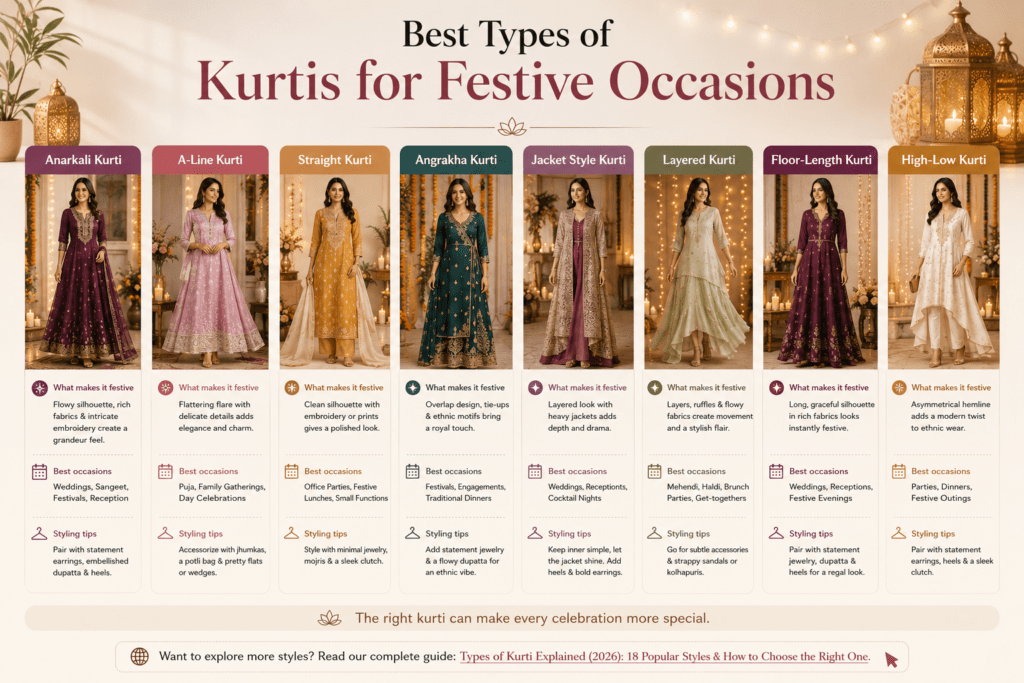
Here are the kurti styles I consider most festive, along with what makes each one special.
Anarkali Kurti
- What makes the style festive: The flared, flowing silhouette naturally feels dressy and dramatic, making it one of the most popular kurti styles.
- Best occasions: Weddings, Diwali, and festive family functions.
- Styling tips: Pair an Anarkali kurti with statement jewellery and heels for a complete kurti set look.
A-Line Kurti
- What makes the style festive: The gentle flare adds movement without being too heavy, making it comfortable for long celebrations.
- Best occasions: Navratri, family gatherings, and daytime festive events.
- Styling tips: An embroidered A-line kurti pairs beautifully with juttis and a simple dupatta.
Straight Kurti
- What makes the style festive: A well-embellished straight kurti can look just as festive as a flared one, while staying easier to move around in.
- Best occasions: Office festive celebrations and smaller family functions.
- Styling tips: I like pairing a straight kurti with palazzos and a statement necklace for balance.
Angrakha Kurti
- What makes the style festive: The asymmetrical, wrap-style front gives it a traditional, regal look that instantly feels celebratory.
- Best occasions: Diwali, weddings, and Raksha Bandhan celebrations.
- Styling tips: Let the drape of the angrakha kurti stand out by keeping jewellery relatively simple.
Jacket Style Kurti
- What makes the style festive: The layered jacket adds structure and richness, especially when it carries embroidery or contrast fabric.
- Best occasions: Wedding functions and evening festive celebrations.
- Styling tips: A jacket style kurti works well without a dupatta, since the jacket itself completes the look.
Layered Kurti
- What makes the style festive: Multiple layers of fabric create volume and movement, which feels naturally festive.
- Best occasions: Navratri and Diwali celebrations.
- Styling tips: Choose lightweight fabrics for layered kurtis so the outfit does not feel too warm during long celebrations.
Floor-Length Kurti
- What makes the style festive: The long, flowing length instantly elevates the outfit, making it feel closer to a gown.
- Best occasions: Weddings and evening festive events.
- Styling tips: Pair a floor-length kurti with heels and minimal jewellery so the silhouette remains the focus.
High-Low Kurti
- What makes the style festive: The uneven hemline adds a modern twist to a traditional kurti, making it feel fresh and contemporary.
- Best occasions: Karwa Chauth, family gatherings, and casual festive outings.
- Styling tips: A high-low festival kurti looks great with fitted bottoms like churidars or leggings.
If you want to understand these silhouettes in more depth, I have written a full breakdown in Types of Kurti Explained (2026): 18 Popular Styles & How to Choose the Right One.
Best Fabrics for Festive Kurtis
Fabric plays a huge role in how a festive kurti looks and feels through a long celebration.
Silk: Rich and lustrous, silk is a classic choice for a festive kurti. It is best suited for cooler weather or air conditioned venues, and works beautifully for weddings and Diwali.
Cotton Silk: A lighter alternative to pure silk, cotton silk offers a festive sheen while staying breathable enough for daytime celebrations like Raksha Bandhan or family gatherings.
Georgette: Lightweight and flowy, georgette is ideal for a festive kurti that needs movement, such as an Anarkali or layered style, and works well for Navratri and evening functions.
Chiffon: Sheer and delicate, chiffon suits evening celebrations and works especially well for floor-length or jacket style festive kurtis.
Velvet: Best reserved for winter festivals like Diwali, velvet adds warmth and richness, making it a strong choice for wedding wear kurti sets.
Rayon with Embroidery: An affordable yet festive option, embroidered rayon works well for office festive celebrations or smaller family functions where you want a festive touch without the higher cost of silk.
For a deeper look at how each fabric feels, drapes, and performs, I have covered this in detail in my Kurti Fabric Guide (2026): 15 Popular Fabrics & How to Choose the Right One.
Best Colours for Festive Kurtis
Colour choice can make or break a festive kurti look, so here is where each popular shade works best.
- Red: A timeless festive colour, perfect for weddings and Diwali celebrations.
- Maroon: Rich and versatile, maroon works well for both daytime and evening festive events.
- Emerald Green: A striking choice for Eid and Navratri, especially in silk or georgette.
- Royal Blue: Bold and elegant, ideal for evening functions and wedding wear kurti sets.
- Mustard: A warm, earthy shade that feels especially festive during Navratri and Raksha Bandhan.
- White with Gold Embroidery: Elegant and versatile, this combination suits Eid and daytime wedding functions beautifully.
- Black for Evening Celebrations: A sleek, modern choice for evening festive gatherings and receptions.
- Pastel Pink: Soft and pretty, ideal for daytime celebrations like family lunches or Karwa Chauth.
- Lavender: A fresh, delicate shade that works beautifully for spring and summer festive occasions.
- Ivory: Subtle and elegant, ivory pairs well with statement jewellery for weddings and formal festive events.
Festive Kurti Ideas for Different Celebrations
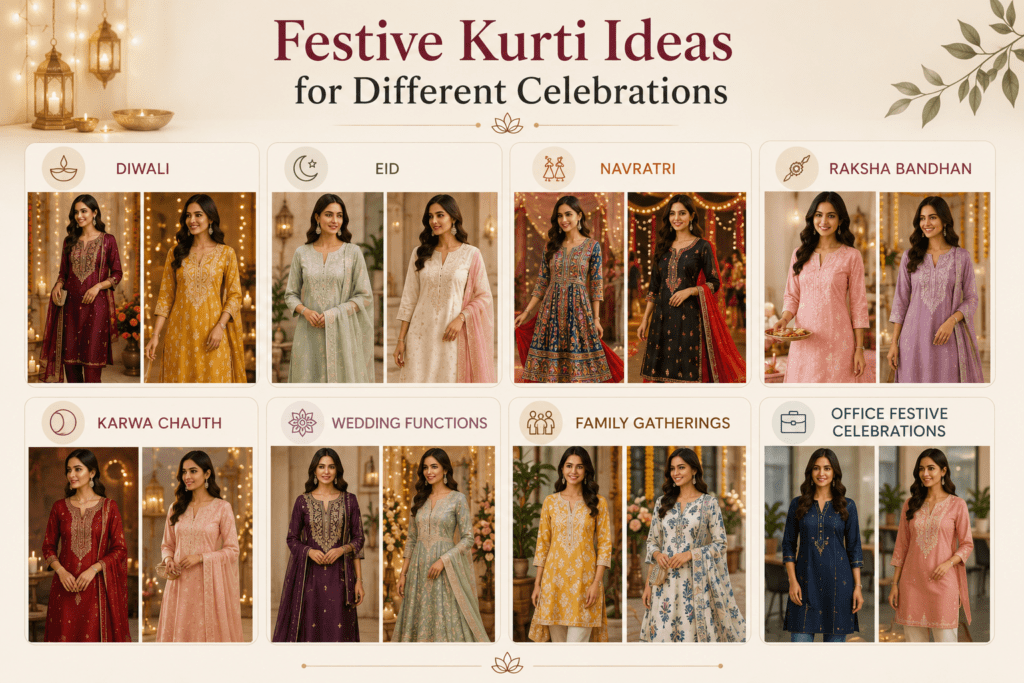
Each celebration has its own mood, so here is how I plan a festive kurti outfit for each one.
Diwali
For Diwali, I lean towards a festive kurti in rich jewel tones like red, maroon, or emerald green, ideally in silk or velvet. A Diwali kurti set with gold embroidery and matching jewellery works beautifully for evening celebrations, and it also photographs well if you are taking Diwali kurti pose pictures with family.
Eid
An Eid special kurti often leans towards elegant, flowing silhouettes like Anarkali or floor-length styles. White with gold embroidery or soft pastel shades work beautifully for an Eid kurti, paired with delicate jewellery and juttis.
Navratri
Navratri calls for a festive kurti that allows movement, since dancing is usually part of the celebration. A Navratri special kurti in georgette, styled as an A-line or layered silhouette, works well, especially in traditional colours associated with each day of the festival.
Raksha Bandhan
For Raksha Bandhan, I prefer a festive kurti that feels celebratory but still comfortable for a day spent with family. A straight or A-line Raksha Bandhan kurti in cotton silk or lightweight georgette, paired with simple jewellery, works perfectly for this occasion.
Karwa Chauth
Karwa Chauth outfits often lean traditional, with red, maroon, or gold festive kurti sets paired with a dupatta and bangles. A high-low or Anarkali kurti with subtle embroidery feels appropriately festive without being overly heavy.
Wedding Functions
Wedding functions call for the most elaborate festive kurtis, whether it is a jacket style kurti, a wedding kurti set with heavy embroidery, or a floor-length silhouette. Rich fabrics like silk and velvet work best here, paired with statement jewellery.
Family Gatherings
For family gatherings, I usually go for something festive but understated, like a straight or A-line festive kurti in cotton silk or rayon with light embroidery, paired with comfortable footwear for a day spent on your feet.
Office Festive Celebrations
Office festive celebrations call for a more subtle festive kurti, one that feels celebratory without being too elaborate for a work setting. A straight or shirt style office wear kurti in a festive colour, with minimal embroidery, strikes the right balance.
Choosing the Right Festive Kurti for Your Body Type
Here is a table I rely on when helping people choose a festive kurti that flatters their body type.
| Body Type | Recommended Kurti |
| Petite | Straight, A-Line |
| Pear | A-Line, Angrakha |
| Apple | Straight, V-Neck Styles |
| Curvy | Anarkali |
| Tall | Floor-Length, Jacket Style |
Styling Your Festive Kurti
Once you have picked the right festive kurti, styling it well brings the whole look together.
Jewellery: I match jewellery to the neckline and embroidery of the kurti, going bold with jewellery only when the kurti itself is relatively simple.
Footwear: Heels or block heels work well for evening festive events, while juttis and flats are better suited for daytime celebrations that involve a lot of standing or walking.
Dupattas: A contrasting or complementary dupatta can elevate a festive kurti set instantly, especially for Diwali, Eid, or wedding functions.
Handbags: A small clutch or embellished potli bag pairs beautifully with a festive kurti, keeping the overall look elegant.
Hairstyles: Soft waves or a neat bun both work well with festive kurtis, depending on the neckline and how much embellishment is around the collar.
Makeup Tips: I usually match makeup intensity to the kurti, going for a bold look with a simpler festive kurti and keeping things softer when the kurti itself is heavily embellished.
Choosing the Right Neck Design for Festive Kurtis
The neckline of a festive kurti has a big impact on how elegant the overall outfit feels.
- Boat Neck: Adds a graceful, wide silhouette that works beautifully for Anarkali and floor-length festive kurtis.
- Sweetheart Neck: Flatters the upper body and feels naturally festive, especially for weddings.
- Mandarin Collar: Gives a structured, polished look, ideal for office festive celebrations and Eid.
- Keyhole Neck: Adds subtle detail without being too elaborate, suited for family gatherings and daytime events.
- V-Neck with Embroidery: Combines a flattering shape with festive detailing, working well across almost every celebration.
If you want to explore more necklines in detail, I have covered this fully in my Kurti Neck Design Guide (2026): 20 Popular Necklines & How to Choose the Right One.
Long Kurti or Short Kurti for Festivals?
Both long and short festive kurtis have their place, depending on the occasion.
Long Kurtis
- Traditional celebrations like Diwali and Navratri often call for the elegance of a long festive kurti.
- Weddings suit long, flowing silhouettes like Anarkali or floor-length kurtis.
- Religious functions feel more appropriate with the coverage and grace of a long kurti.
Short Kurtis
- Family lunches are comfortable in a short festive kurti, especially paired with jeans or palazzos.
- Casual festive gatherings, like a small Raksha Bandhan celebration at home, work well with a short kurti.
- College celebrations often call for a short, easy to move in festive kurti.
- Office festive events are suited to a short or knee-length kurti that still feels professional.
For a deeper comparison, I would point you to Long Kurti vs Short Kurti.
Common Mistakes When Buying a Festive Kurti
I have made a few of these mistakes myself, so here is what I would avoid.
- Choosing style over comfort: A festive kurti that looks stunning but feels restrictive rarely gets worn twice.
- Ignoring fabric for the season: Velvet in peak summer or chiffon in peak winter both tend to feel wrong for the weather.
- Over-accessorising: Piling on jewellery over an already detailed festive kurti can make the outfit feel cluttered.
- Buying the wrong size: Festive kurtis with embellishment are harder to alter later, so getting the fit right at the time of purchase matters.
- Choosing colours that don’t suit the occasion: A very bright colour might feel out of place at a religious function, just as a muted shade can feel underwhelming at a wedding.
- Not considering reusability: A festive kurti that only works for one specific celebration is a less practical investment than one that can be restyled for multiple events.
Expert Styling Tips
A few habits have made festive kurti shopping and styling much easier for me over the years.
- Invest in timeless colours that work across multiple festivals, like maroon, mustard, or emerald green.
- Choose breathable fabrics for daytime celebrations, saving heavier fabrics like velvet for evening events.
- Let embroidered kurtis be the focal point by keeping accessories minimal.
- Select footwear that balances elegance with comfort for long hours of standing, walking, or dancing.
Conclusion
A great festive kurti strikes the right balance between elegance, comfort, and personal style. Whether you are shopping for a Diwali kurti set, an Eid special kurti, a Navratri outfit, or a wedding wear kurti, the goal is to choose something that feels as good as it looks, and ideally something versatile enough to wear beyond a single celebration. I would encourage you to think beyond just one festival when choosing your next festive kurti, so it earns its place in your wardrobe for years to come.
If you want to keep exploring, take a look at the other guides in this series by Duova Studio, including Kurti With Jeans Guide, Kurti Fabric Care, Kurti Fabric Guide, and Long Kurti vs Short Kurti. Together, they will help you build a festive wardrobe that feels elegant, comfortable, and true to your personal style.
Frequently Asked Questions
Which fabric is best for festive kurtis?
Silk, cotton silk, and georgette are among the most popular fabrics for festive kurtis, depending on the occasion and season.
Which colour is most popular for festivals?
Red, maroon, and emerald green remain some of the most popular colours for festive kurtis, especially for Diwali and weddings.
Can I wear a short kurti for festive occasions?
Yes, a short festive kurti works well for casual celebrations, family lunches, college events, and office festive gatherings.
Which kurti style suits weddings?
Anarkali, floor-length, and jacket style kurtis are especially popular choices for wedding functions.
How should I accessorise a festive kurti?
Match your jewellery to the neckline and embroidery of the kurti, keeping accessories minimal if the kurti itself is heavily embellished.
Which neckline looks most elegant for celebrations?
Sweetheart neck and boat neck are among the most elegant options for festive kurtis, especially for weddings and evening events.
What footwear works best with festive kurtis?
Heels and block heels suit evening celebrations, while juttis and flats are better for daytime festive events.
Can I rewear the same festive kurti in different ways?
Yes, changing the dupatta, jewellery, or footwear can help you restyle the same festive kurti for different occasions.